


With UK and EU Sanitary and Phytosanitary (SPS) talks now underway, the National Farmers’ Union (NFU) has urged Government to negotiate appropriate transition periods and exemptions to “minimise disruption” to Britain’s farming sector.
The NFU has called on Government to secure a variable paced, transitional arrangement with phased commencement dates for alignment in its negotiations with the EU for a SPS deal. It said that this will mean distinguishing between areas where trade barriers could be removed quickly, such as for the imports of key horticultural inputs, and “those that require a greater time to adjust”, such as rules around plant protection products that have diverged from the EU since Brexit.
Exemptions to SPS dynamic alignment
The NFU is also asking for some exemptions from dynamic alignment. Among them are:
- Precision breeding – The Precision Breeding Act is now in place in England and NFU stated that progress in this area should be safeguarded to enable the farming sector to continue to “move forward in sustainable, resilient and innovative food production”.
- Bovine TB cattle vaccination – EU legislation prohibits the use of vaccines against infection with mycobacterium tuberculosis complex (MTBC). According to the NFU, if this isn’t exempted, British farmers may lose the ability to vaccinate cattle in the future, an ongoing area of development in the UK’s bovine TB eradication strategy.
- Antimicrobial Resistance (AMR) provisions in veterinary medicines – In the EU, antibiotics can only be used preventatively for livestock on an individual basis, despite the possibility of other animals being infected, said the NFU. It would like to retain the current British law, which enables, when necessary, the preventative treatment of a group of animals exposed to disease under veterinary supervision.
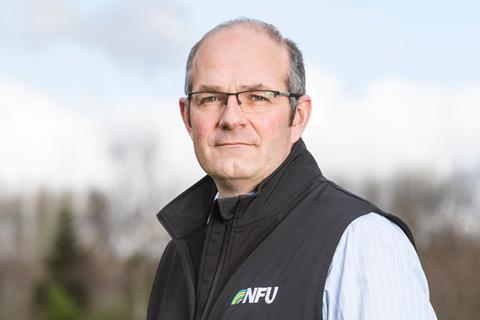
NFU president Tom Bradshaw commented: “Ultimately, this deal should enable smoother trade with our largest trading partner. Alignment in many areas will help remove friction and unlock trade. But there are some areas which need to be treated carefully to minimise disruption to Britain’s farming sector and some which need to be excluded completely.
“We have given clear direction to the Government’s negotiating team on what we believe is needed to benefit British food production and farm businesses.”
Tom Bradshaw, NFU president
Bradshaw continued: “We have given clear direction to the Government’s negotiating team on what we believe is needed to benefit British food production and farm businesses. At the centre of this are appropriate transition periods specific to individual policy areas and some necessary exemptions to help safeguard areas of progression and innovation.
“It’s important we get this right, so British farmers aren’t unduly bound by rules which restrict our ambitions for food production. Alongside securing necessary exemptions, it’s vital that the UK has a meaningful role in the rule-shaping process in the future and that the voices of British farmers and growers are represented in future discussions.
“It’s up to the Government now to back its farmers around the negotiating table and we’ll continue to work with them as talks progress.”