


The Department for Environment, Food and Rural Affairs (Defra) has put forward proposals to end the use of high-concentration carbon dioxide stunning in slaughterhouses.
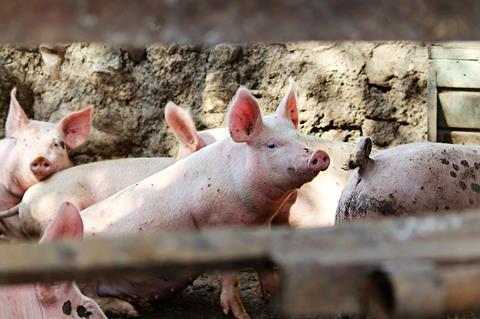
Defra said the move towards alternative pig stunning methods would “help to prevent animals experiencing panic and breathing difficulties before losing consciousness”, stating the importance of minimising distress during handling and slaughter as part of safeguarding pigs’ welfare.
The Government has now put forward proposals to replace the practice of CO2 stunning with what it called “more humane alternatives”, such as argon gas and automated electrical stunning. Defra said that both methods were proven to substantially reduce animal suffering.
Farming Minister Stephen Morgan stated: “We are a nation of animal lovers – pigs are intelligent animals that deserve to be treated with care and respect throughout their lives including at slaughter.
“The public want to know the meat they buy in the shops is produced in a way that supports high standards of animal welfare. These plans will help deliver that and reduce unnecessary suffering.
“We are committed to supporting farmers and businesses make this transition which will bring long-term benefits.”
Government said it had been working with pig processors, equipment manufacturers, gas suppliers and animal welfare organisations since April 2024 to examine the practicalities of introducing alternative measures and to ensure minimal impact of costs to consumers.

Responding to the proposals, Dr Jason Aldiss, executive director at the Association of Independent Meat Suppliers (AIMS), asked Government to suspend the consultation on phasing out CO2 pig stunning until the UK-EU SPS negotiations are concluded, stating that “the implications for slaughter welfare legislation are clear”.
Writing to Defra, Aldiss said: “Please publish the Government’s assessment of the legal route for a domestic ban under the proposed SPS agreement. Identify any exception or approval procedure required and confirm whether the necessary position has been agreed with the EU. Businesses need these answers before planning compulsory conversion.
“Article 26(4) prevents an EU Member State from restricting products from another Member State merely because the animals were not killed in accordance with its stricter national rules. How will this be addressed in the agreement? Will pork produced using CO2 remain eligible for sale here while domestic processors are prohibited from using it?
“If overseas suppliers retain existing systems while our members face conversion and additional operating costs, imports could gain a cost advantage. The policy risks shifting production, investment and jobs overseas while British consumers continue buying pork produced using the same stunning method. Defra must explain how it would prevent that outcome.
“The UK’s 1999 ban on sow stalls and tethers provides a clear warning. British producers incurred costs that competing overseas suppliers did not, while imports from systems prohibited here continued. In 2009, the EFRA Committee concluded that warnings of damage to the industry had been justified, noting declining domestic production and rapidly rising imports. Defra must not repeat the mistake of undermining our industry while shifting demand to lower-welfare production overseas.”
Aldiss said that AIMS would address the wider welfare and operational evidence in due course, highlighting that the immediate issue was proceeding before the regulatory framework was settled. He called for Government to suspend the proposed consultation pending completion of the SPS negotiations and clarification of the legal and import implications.

John Powell, chief executive of British Meat Processors Association (BMPA), commented: “We fully support improving animal welfare, but Defra should have commissioned the necessary research before launching this consultation. At present, there is no proven, commercially viable alternative to CO2 that can maintain the throughput required by British pig processors and the supply demanded by British consumers.
“Without a viable alternative to CO2, we risk reducing domestic processing capacity, undermining British pig farming and becoming more reliant on imported pork from countries that continue to use CO2 as a tried and tested method of stunning. At a time when food security is already under pressure, that would be deeply irresponsible.”
“The EU is not currently proposing a similar ban so, if a ban on CO2 is introduced in the UK, it will dramatically decrease our competitiveness.”
John Powell, BMPA
He continued: “We are surprised that the Government has launched this consultation now, as we are so close to an SPS agreement with the EU, which will dramatically improve our competitiveness. The EU is not currently proposing a similar ban so, if a ban on CO2 is introduced in the UK, it will dramatically decrease our competitiveness.”
BMPA also challenged the suggestion that CO2 supply concerns justify the proposed phase-out. Despite modest price increases linked to the Iran conflict, supply to the sector has not been disrupted, and CO2 represents a relatively small proportion of food production costs.
Powell added: “We need a whole-pathway assessment of the welfare, economic and practical consequences before any decisions are made. If research identifies a genuinely better and commercially viable alternative, industry will need a realistic transition period to invest and adapt.
“Until then, phasing out CO2 is neither practical nor responsible. We cannot afford to gamble with animal welfare or Britain’s food security.”
Government has launched a consultation to seek views on the proposals, including the welfare benefits, costs, feasibility and potential timescales for moving away from carbon dioxide.
The consultation is now open and will run until 21st December 2026.