



A Government-commissioned Farm Profitability Review, led by Baroness Minette Batters, has detailed short, medium and long-term actions required to “strengthen farming profitability”.

The review aimed to provide a “comprehensive assessment of the issues underpinning farm business profitability”, and sets out recommendations spanning the short, medium and long term.
In a statement announcing the publication of the review, Emma Reynolds, Secretary of State for Environment, Food and Rural Affairs, said: “The Government commissioned this review to examine how we can support farm businesses to become more profitable. Doing so is essential for our country’s economic growth and food security, enabling a stronger, more productive domestic farming sector that also helps keep high‑quality British food on shelves for consumers who want to buy British.
“The review makes 57 recommendations and highlights the sector’s potential to stand at the heart of Britain’s economic renewal. It calls for stronger partnership between the Government and industry, better data to drive productivity, smarter regulation, and more targeted innovation – themes which are central to this Government’s Plan for Change and essential to my vision to grow the rural economy.”
Alongside the review, Reynolds announced that she had established a Farming and Food Partnership Board, which she will chair alongside Farming Minister Dame Angela Eagle as deputy.
Speaking about the Partnership Board, Reynolds commented: “The new Board will help shape decisions, remove barriers to investment and tackle the challenges the sector faces. This is a key element of our cross-Government food strategy.”
Review recognises economic value of agriculture businesses
The National Sheep Association (NSA) welcomed the review, with NSA chief executive Phil Stocker commenting: “NSA is pleased to at last be able to read the extensive review. I’d like to thank Baroness Minette Batters for all her work in compiling this review and I am pleased NSA was able to contribute in a number of ways.
“We welcome the review’s emphasis on greater recognition of the wider economic importance of farming, strengthening market foundations and putting an economic value on nature provision, improving fairness in the supply chain and ensuring that farming businesses are better equipped to manage volatility and rising costs, something that almost every farmer in the UK has been all too familiar with in recent years.
“Many of the review’s recommendations have clear relevance for sheep farmers, particularly those operating grazing livestock systems in upland and marginal areas, where it has been identified that margins are tight, exposure to volatility is high, and access to SFI intermittent.”
NSA said it was “particularly pleased” to see recognition of the need to better acknowledge the economic value of agriculture, horticulture and related businesses. It went on to state that it was pleased with the recognition of the importance of protecting and strengthening local supply chains, including recommendations that support the future of small and medium-sized abattoirs.
It said that it “strongly supports” the review’s recognition that agriculture must be treated as a sensitive sector in trade negotiations, stating that “sheep farming, in particular, is vulnerable to being undercut by imports produced to lower standards”. According to NSA, clear safeguards in future trade deals are essential if UK sheep farmers are to “compete on a fair footing” and continue delivering public goods alongside food production.
However, NSA urged that care is taken around recommendations for an ‘active farmer’ clause, to ensure that its part time sheep farmers are not excluded from access to funding, unintentionally excluding part‑time farmers and new entrants whose working patterns can be of a part time nature although genuinely farming. Any definition of ‘active farmer’ must reflect the realities of sheep production, said NSA, and avoid penalising those who are genuinely farming but supplementing income to remain viable.
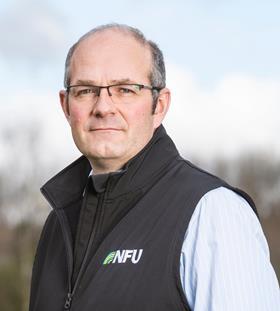
National Farmers’ Union says “change is needed”
Responding to the publication of the Government-commissioned Farm Profitability Review, NFU president Tom Bradshaw said: “This is a thorough and complex report, and we will take our time to digest the details and analyse the recommendations made by Baroness Batters to improve the profitability of Britain’s farming businesses.
“As we continue to face huge and wide-ranging challenges from geopolitical uncertainty and trade deals that threaten to undermine our marketplace, to uncertainty around the future of environmental schemes, extreme weather events, continued price volatility and the unfair family farm tax, this report is right to recognise that reform is needed. Changes that will drive competitiveness and profitability, which are critical elements of thriving farming businesses, are also crucial to achieving the Government’s own targets for economic growth.
“This is about enhancing the financial resilience and long-term sustainability of British farming – the bedrock of the nation’s largest manufacturing sector, food and drink, worth £153 billion to the economy and an industry that supports more than four million jobs.”
“The creation of a new farming and food partnership board with profitability and food security at its heart will enhance collaboration.”
Tom Bradshaw, NFU
Bradshaw continued: “In the NFU’s submission to this review, we set out our key priorities, which we believe are needed to provide stability and restore farmer confidence. It’s therefore encouraging that the five priority areas singled out by Defra are consistent with what the NFU has been calling on Government to prioritise.
“The creation of a new farming and food partnership board with profitability and food security at its heart will enhance collaboration and ensure the Government and industry can work in partnership delivering on the issues that matter most for the sector.
“A commitment to continue working on supply chain fairness is a top priority for all farming sectors, while delivering planning reforms will help underpin growth for the industry. Refocused efforts on growing our exports is also welcome and vital to adding value for domestic producers.
“And while private finance can play a big part in delivering new income streams and delivering for nature, we can’t hide from the fact that significant challenges remain to this beyond the pilot stage to a truly scalable market delivering financial opportunities for farmers.
“The ball is now in Defra’s court. Ministers have to drive these priority areas forward. But alongside this, there are other immediate actions that are needed to boost British farming like providing much-needed clarity and certainty on the future of the Sustainable Farming Incentive (SFI) and doing the right thing on the pernicious inheritance tax changes.
“Secretary of State Emma Reynolds recently said that farm profitability was vital to enable the UK agriculture sector to grow. We couldn’t agree more. The NFU stands ready to work with Government to deliver our collective ambitions for economic growth delivered by a British agriculture sector that is set up to thrive.”
Access the Farming Profitability Review 2025 by clicking here.