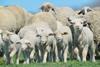



The National Farmers’ Union (NFU) has warned that, if introduced, proposed measures on lamb tail docking and castration practices could have “substantial implications” for livestock markets, abattoirs and meat processors.
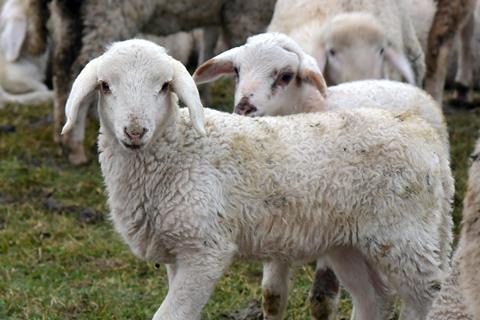
The Department for Environment, Food and Rural Affairs (Defra), the Welsh and Scottish Governments and the Northern Ireland Executive have published proposals to reform the rules for castrating and tail docking lambs.
NFU has warned that if changes to current legislation were to severely limit farmers’ ability to routinely castrate and tail-dock lambs, this could have a “significant knock-on effect” further up the lamb supply chain.
NFU highlighted that farmers may look to process their male lambs before they hit puberty to avoid ‘ram taint’, an unpleasant flavour that can develop in the meat of non-castrated sheep. They may also choose to process their animals earlier to prevent unwanted pregnancies as segregating lambs of different sexes is extremely difficult. As a result, abattoirs could see a rise in lambs coming through their doors at a far younger age. NFU said this in turn could have implications for carcase weights and availability of old season lamb into the New Year, impacting customer supply commitments.
Undocked lambs (animals that haven’t had their tails shortened) are more prone to the parasitic infection myiasis, also known as flystrike. NFU stated that sending lambs to slaughter undocked could expose processing sites to hygiene issues and, therefore, potential food safety concerns.
NFU Livestock board chair David Barton said: “I’m proud that the UK already produces lamb to some of the highest standards in the world. This proposal, while well-meaning, could actually be detrimental to animal welfare, will reduce our ability to compete, damage confidence even further and impact potential for growth in a sector that has a strong future supplying quality lamb for the domestic and export market.”
Defra suggests use of pain relief
Tail docking and castration in lambs is considered necessary to manage negative health and welfare effects caused by disease, said NFU, or to avoid unwanted pregnancies and complications during post-slaughter processing.
Castration and tail docking are most commonly performed using rubber rings without anaesthesia or analgesia. Both procedures are permitted in the UK and are currently governed by legislation including the Veterinary Surgeons Act (1966).
Defra’s proposed changes suggest that routine castration and tail docking should be minimised and if used it is carried out with pain relief. A detailed list of the proposals can be found here.
A survey of NFU members two years ago found that 87% of respondents said they use rubber rings to routinely castrate lambs and 93% to routinely tail dock lambs. This indicates that changes made to the current legislation would impact a high proportion of farmers.
The same survey also found that 82% of sheep producers said the welfare of the lamb over its full lifetime would be negatively impacted if they could not castrate or tail dock.
Added cost to the supply chain
Responding directly to the Government’s consultation, Barton stated: “These proposals will be of concern for sheep producers right across the UK. We carry out these essential management tasks for many reasons to protect the welfare of the animal and to ensure we can continue to sell lamb throughout the year.
“The industry must have these tools available and, while I’m open to the use of pain relief, we don’t currently have a licenced or recommended product for young lambs.”
Barton continued: “Injecting young lambs risks introducing diseases and incorporating aesthetic and long-acting pain relief into the castration process will add yet another task in sometimes difficult working environments.
“We must also consider the added cost to the supply chain, making the UK less competitive when compared to those that import thousands of tonnes of lamb into the UK each year.”
The NFU’s member survey also found that 77% of respondents said if they could not castrate or tail dock lambs it would lead to a reduction in business profitability.
Consultation to run until March
The Government’s consultation seeking views on proposed changes to the methods used for lamb castration and tail docking is running until 9th March.
NFU is encouraging members from across the lamb supply chain to submit their views on how the impact of the proposed changes will impact their businesses.
Views can be submitted to the consultation here.