


The Department for Environment, Food and Rural Affairs (Defra) and Welsh Government have confirmed changes to livestock feed controls to allow pig and poultry protein into animal feed, but has delayed implementation as Government works towards a new SPS agreement.
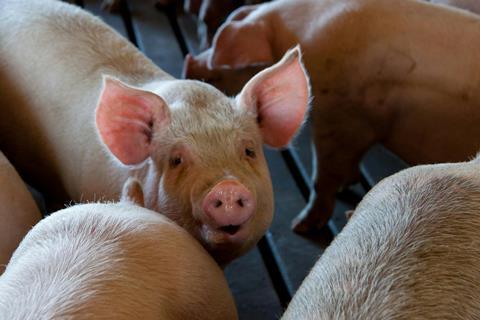
In early 2025, Defra and the Welsh Government conducted a joint public consultation on whether England and Wales should change their livestock feed controls to allow certain processed animal proteins (PAP) in feed.
The proposals aim to update livestock feed controls to:
- Reflect current scientific knowledge of transmissible spongiform encephalopathies (TSEs)
- Open new markets for industry
- Level the playing field with the EU
Government said the proposals would “maintain the UK’s high level of biosecurity, animal and health protection”.
In a publication from Government, a total of 736 responses to the consultation were received, with 732 responses sent through the online Citizen Space platform, and four email responses.
All respondents were asked which option best describes them or their organisation, and 84% of the responses received (616) were from members of the public.
Government also received responses from insect protein producers, compound feed mills, feed ingredient manufacturers, farmers, trade associations, abattoirs, rendering plants, retailers and enforcement officers.
Proposal to allow poultry PAP in porcine feed
In response to the proposal to allow poultry PAP in porcine feed:
- 71 respondents agreed
- 610 respondents disagreed
- 51 respondents didn’t know
Respondents supporting the proposal noted the scientific evidence behind the safety, while many respondents mentioned the potential environmental benefits of using PAP that is currently exported to reduce the reliance on imported soybean-based feed and to support a circular economy.
Following the EU implementing these changes to feed controls in 2021, the publication pointed out that industry wanted to “level the playing field” with the European market.
Currently, pigs imported from the EU can be fed on poultry PAP and imported as product into the UK. A few responses also mentioned the nutritional value of poultry PAP and the economic opportunity. Animal by-product (ABP) processing plants manufacturing poultry or porcine PAP would be able to sell to a Great Britain (GB) market for use in the production of porcine and poultry feed.
Most respondents who disagreed with the proposal were members of the public, and many raised concerns about potential risk to biosecurity and public health. Many respondents were concerned about TSE risk, and some mentioned the risk from other pathogens.
Many respondents opposed the changes due to ethical reasons and concerns that poultry PAP is not part of a pig’s natural diet, and some of these respondents favoured moving towards more plant-based options and reducing reliance on animal products.
Defra also reported that it received a few responses from farmers concerned about consumer perception should the proposal be introduced, and received responses indicating that the proposal would affect religious dietary requirements.
PAP is derived entirely from category 3 material, which has been treated in accordance with ABPs Commission Regulation (EU) No 142/2011. These methods are designed to “eradicate virus and bacteria within the product”, and the current controls were reportedly made in a precautionary manner, when knowledge of BSE was limited. Since then, research has demonstrated that pigs and poultry are not naturally susceptible to TSEs.
Defra and the Welsh Government acknowledged respondents that disagreed with the proposal for ethical reasons, and acknowledged concerns that poultry PAP would not form a natural part of a pig’s diet. However, pigs are omnivores and inclusion rates of poultry PAP in feed in the EU are typically in the range of 5-10%, and Government highlighted that these changes would be an opportunity for industry to utilise category 3 materials for PAP and sell it to a domestic GB market for livestock feed. It also said this could increase the sustainability of the industry.
Defra and the Welsh Government said they were assured that the changes would “maintain the current levels of biosecurity and public health in England and Wales”. The Animal and Plant Health Agency (APHA) conducted a risk assessment on the potential impact on animal health of adopting these same changes in GB, and this risk assessment indicated that the overall risk of an animal in the UK being infected with a TSE due to these legislative relaxations is “very low” and is not estimated to increase the level of TSE infection and spread. The publication stated that Defra and the Welsh Government acknowledged concerns around consumer perceptions, and said they would work with industry to ensure “effective communications” on the safety of the proposals.
Proposal to allow porcine PAP in poultry feed
In response to the proposal to allow porcine PAP in poultry feed:
- 72 respondents agreed
- 614 respondents disagreed
- 46 respondents didn’t know
The publication detailed how the main reasons respondents supported the proposal were largely the same as those for supporting poultry PAP in porcine feed, and as with poultry PAP, poultry imported from the EU can be fed on porcine PAP and imported as product into the UK.
Similarly to the last proposal, most respondents who disagreed with the proposals were members of the public, with many raising concerns about potential risk to biosecurity and public health. Many were concerned about TSE risk, and some mentioned the risk from other pathogens.
As with the poultry PAP proposal, many opposed the changes due to ethical reasons and concerns that porcine PAP is not part of a chicken’s natural diet, with respondents favouring moving towards more plant-based options and reducing reliance on animal products.
Much of the response from Defra and Welsh Government was the same as the previous proposal, but they pointed out that regarding religious dietary requirements, animals reared on a partially carnivorous diet may not be considered halal or kosher. Defra said it has considered how religious dietary requirements may be affected by these proposals and has reached out to halal and kosher certification authorities.
Defra met with one of the main halal certification schemes in the UK during the consultation period. It assured Government that it was able to trace products back to the feed mill to assure consumers that animal feed complies with Sharia law. Government also reached out to kosher certification authorities but did not receive a response to the consultation. Current legislation allows porcine, poultry and insect PAP to be used in aquaculture feed and animals reared on these diets in the EU can already be imported into the UK.
Defra and Welsh Government said they intended to proceed with the proposals but said they would not be making the changes independently due to the Government’s intention to reset to UK’s relationship with the EU and pursue an SPS agreement to align with EU rules.
National Pig Association unsurprised by delay

Responding, NPA chief executive Lizzie Wilson said she was “not surprised by the delay”, but expressed concern that this was part of a “growing trend” of Defra policy interventions being put on hold until the EU-SPS agreement is implemented. The timescale for this remains uncertain.
Continuing, Wilson said NPA has “always welcomed the return, in principle, of pig and poultry PAP”, but said certain conditions would need to be met before it could be used in practice: “The industry would need to be convinced the practice is safe and well-regulated and accepted across the supply chain and by the public. There are also various practical issues to address to make it a cost-effective solution.”
In its response to the consultation, NPA said any proposal to permit the use of pig and poultry PAP in England would need to address the four parameters:
- The acceptance of this practice by the food value chain partners and stakeholders, from livestock farmers to consumers, including farm assurance bodies
- The ability and willingness of all operators throughout the supply chain to comply with all the legal requirements to ensure the practice is entirely safe and traceable, and to bear the associated not insignificant costs
- The market competitiveness of pig and poultry PAPs
- The fitness of analytical control tools and interpretation of results.