


Quality Meat Scotland (QMS) has reported that a slowdown in the rate of herd decline provides a “slightly more encouraging” signal for future suppliers than has been the case in recent years.
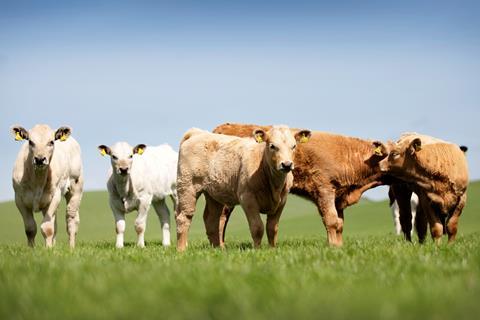
QMS’s latest population data reveals a “modest but meaningful” improvement in Scotland’s prime cattle pipeline. The trade body found that numbers of males and beef-sired females aged 12 to 30 months increased by 1.6% year-on-year in spring 2026, double the rate recorded in January.
It also reported a 2% rise in the key 18-to-24-month age category following a period of stability over the winter. Older prime cattle numbers also recovered, increasing by 1.3%, while a 1.4% uplift in the 12-to-18-month category suggested that there should be additional cattle available for finishing during the second half of the year.
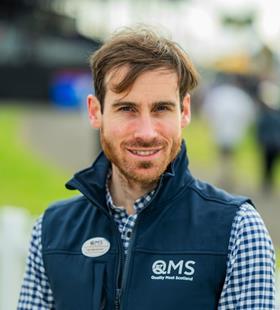
Commenting on the latest position, Iain Macdonald, QMS’s market intelligence manager, said: “The latest picture in Scotland contrasts with the wider GB market, where supply remains considerably tighter. However, numbers should begin to stabilise by the year-end south of the border.
“An increase in younger cattle numbers may eventually provide some further support to finished cattle availability, but this has not yet translated into weaker store cattle prices. Store auction volumes have remained tight and prices have largely held above 2025 levels, which could reflect the shifting balance of production with suckler-bred calves remaining scarce and beef-sired dairy calves being channelled through dedicated supply chains rather than traditional store markets.
“One of the key market developments over the past year has been a sharp reduction in slaughter rates. Under-30-month slaughter fell much faster than expected last year and has remained low in the first half of 2026. There remains scope for a modest recovery in slaughter numbers this year, with modelling suggesting Scottish cattle kill could increase by less than 1% if slaughter rates partially rebound. However, a reduction in heifer slaughter continues to limit throughput, and heavier carcase weights have supported production volumes.”
In 2025, a further small reduction in the net outflow of Scottish-born cattle reportedly limited the overall decline in kill at Scottish abattoirs. Moves to English farms and auctions continued to fall back from their 2022 peak but remained elevated, said QMS, and this pattern continued in the first quarter of 2026. However, moves directly to English abattoirs increased on their 2025 levels.
Macdonald continued: “Encouragingly, the decline in Scotland’s breeding herd appears to be softening. In April 2026, there were 386,300 beef-sired females aged over 30 months on Scottish holdings, representing a decline of 1.5% year-on-year. While still a reduction, it was the smallest annual fall recorded since mid-2022. More recent ScotEID data suggests the rate of decline may already have eased further to around 1%.
“Development into genuine herd stabilisation will require greater momentum, although after three quarters of year-on-year declines in beef-sired females aged 24-30 months, they did rebound in April, potentially supporting the herd during this year’s main breeding season. The suckler herd decline in England and Wales continues to outpace Scotland, with beef-sired female numbers over 30 months falling by 2.4% in April.”
UK beef exports “expanded significantly” in 2026
Macdonald concluded: “UK beef imports remained broadly stable during the first five months of 2026, while exports expanded significantly. Import sources continue to diversify, with non-EU suppliers now accounting for between a quarter and a third of imported volumes. Although Ireland remains by far the largest supplier, its market share has fallen from 74% to 64% over the past year. New Zealand has emerged as the second-largest supplier (accounting for 12% of imports at the start of 2025) ahead of Australia (8%), with lower average import prices from NZ suggesting a stronger focus on manufacturing-grade beef rather than premium cuts.
“Overall, the Scottish beef sector is moving towards a period of cautious stabilisation. Although herd contraction is slowing and productivity and prime cattle availability has improved, beef cow numbers remain an ongoing challenge. Confidence is at a knife-edge with calf prices holding up for now and finished prices rebounding from their low, but finishing margins have been significantly squeezed over the past year. Whilst the general direction of travel appears more positive than it has been for several years, sustained progress will be needed before the sector can be considered on a growth trajectory.”