


The Scottish Association of Meat Wholesalers (SAMW) annual conference has concluded that the future success of Scotland’s meat processing sector is vital to maintaining benefits generated by the country’s livestock chain.
The conference was held at the Royal Highland Centre in Ingliston, looking at bluetongue controls, livestock supplies and the body’s ongoing debate with Food Standards Scotland (FSS) over meat processing charges.
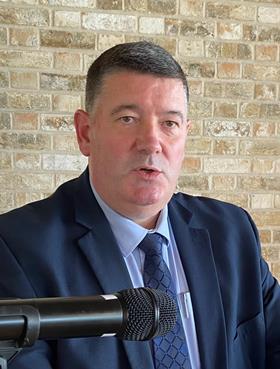
Alan Brown, SAMW president, commented: “Scotland’s red meat sector has many strengths as a source of high-quality beef, lamb and pork, but the pressures bearing down on processors have made 2026 a particularly challenging year.
“Our members continue to battle against rising operating costs, labour availability, energy prices, regulatory issues and uncertainty over future livestock supplies.
“Our industry is well-supported by a skilled 2,400-member workforce, strong domestic livestock provenance and high on-farm production standards. As a result, we contribute in excess of £1.36 billion to the Scottish economy in annual business turnover. It would be a mistake to take this contribution for granted, however.”
“Farmers and processors ultimately depend upon one another, and neither part of the supply chain can succeed in isolation.”
Alan Brown, SAMW
Brown continued: “SAMW will therefore continue to make the case for policies that support primary production and maintain a strong domestic livestock base,” he said, adding that this is an all-industry issue.
“Farmers and processors ultimately depend upon one another, and neither part of the supply chain can succeed in isolation.”
The president also touched on SAMW’s ongoing debate with FSS over what the Association believes is an “unsustainably large increase” in official meat processing control charges.
“Let me be clear,” said Brown, “our members fully support effective official controls and the maintenance of the highest standards of food safety and animal welfare. Nevertheless, the cost increases being imposed on businesses by FSS are significant and come at a time when processors already face intense commercial pressure. These costs cannot simply continue to rise without proper scrutiny of the way the service is structured and delivered.”
He revealed a “breakthrough” in negotiations with FSS, however, following what he called “constructive discussions” with the new chief executive of FSS, Catherine Topley, and the pausing of debt-recovery action to enable further SAMW/FSS engagement to take place.
Brown added: “Independent reviews are examining the costs underpinning the current FSS arrangements and the wider commercial model. SAMW will engage fully with that work, but our focus must remain on practical reform.
“We want to explore greater flexibility within plant business agreements, better alignment between inspection provision and actual operating requirements. The objective must be a system that protects consumers, supports high standards and provides a reliable inspection service, while also delivering value for money for both industry and the public sector.”
Bluetongue creates uncertainty for supply chain
Brown also acknowledged the existence of Bluetongue in Scotland as another “considerable challenge” for the industry, creating uncertainty for farmers, markets, hauliers and processors: “SAMW has worked closely with the Scottish Government and other stakeholders to raise the practical implications of Bluetongue controls for processors and the wider supply chain.
“The introduction of the low-transmission-period arrangements has eased some of the immediate restrictions, but the industry must continue preparing for the longer-term management of bluetongue.”