


A draft sanitary and phytosanitary (SPS) deal has been agreed ahead of an upcoming UK-EU summit, according to reports.

As reported by the BBC, a 200-page draft text regarding the SPS agreement was circulated to EU nations, with journalists stating that the deal is not expected to be implemented until Q1 2028.
The deal will be presented to EU ambassadors at a meeting this week, and comes ahead of the UK-EU summit in Brussels on Friday 20th November.
Reports said the deal should remove the need for Export Health Certificates and Phytosanitary Certificates as well as inspector fees, while the UK would align its regulations with current EU regulations as part of the dynamic alignment process.

John Powell, British Meat Processors Association (BMPA) chief executive, said: “There’s a fundamental misconception that leaving the EU freed British businesses from having to follow EU rules. The reality is that if we want to sell our products into our biggest and closest export market, we have to meet its standards. We already do. What Brexit changed was that we now have to prove it with a mountain of costly paperwork, certificates and checks.
“Five years on, the promised alternative markets have come nowhere near replacing the EU trade we’ve lost. A well-designed SPS agreement offers a real opportunity to reverse that damage, particularly for smaller processors who have effectively been priced out of exporting.”
BMPA said it was also urging negotiators to ensure that the transition to the new arrangements is practical and does not create fresh disruption for businesses.
Powell continued: “One particularly important issue is health marks and the treatment of products already labelled and held in cold storage. We cannot have a cliff-edge date when perfectly good, legally produced meat suddenly becomes unsellable because the rules have changed. There needs to be a sensible transition period that allows existing stock to be sold in the UK without creating an unnecessary administrative burden for either side.
“BMPA is working closely with Government to help shape these practical solutions, drawing on the hard lessons our industry learned when we left the EU.
“The prize for British meat processors is significant. This is an opportunity to strip out costs that add nothing to food safety, restore lost trade and make British meat businesses more competitive. We need to get the details right so the industry can realise those benefits from day one.”
“Future arrangements should have the ambition of reducing friction and costs at the border while supporting growth and safeguarding innovation.”
Tom Bradshaw, NFU
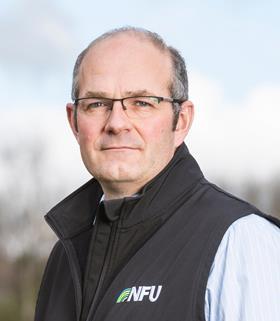
National Farmers’ Union (NFU) president Tom Bradshaw stated: “The EU is our largest trading partner for agri-food products, accounting for 68% of agri-food exports last year, but trade volumes have fallen over a third since 2019. Future arrangements should have the ambition of reducing friction and costs at the border while supporting growth and safeguarding innovation.
“This is about ensuring any policy framework between the UK and the EU supports our ability to produce safe, affordable food by improving farm business viability, profitability and resilience.
“We have made our priorities for a Sanitary and Phytosanitary (SPS) agreement with the EU very clear to Government from day one. British farmers and growers must retain access to precision breeding technologies that will help to strengthen food resilience to extreme weather and to science-based plant protection products that help protect food being grown for 29 million households from pests and diseases.
“Any changes must also provide an appropriate transition period to minimise disruption for farm businesses and we will continue to make this case to Government while we await the final agreement.”
Jim Bligh, director of food policy at the British Retail Consortium (BRC), said: “This is excellent news for retailers and consumers, helping to make food trade with the EU simpler, cheaper and more efficient. The challenge now is implementation, and retailers and their suppliers must be given sufficient time and clear guidance to make the necessary changes without adding unnecessary cost or disruption.”

Dr Jason Aldiss, executive director of the Association of Independent Meat Suppliers (AIMS), added: “The day Brexit’s certification barriers took effect; vets tightened the garrotte around our industry. I opposed Brexit and have fought this strangulation ever since.
“Hundreds of millions have drained into certificates for British food exports to the EU. Where standards are aligned, I see not one shred of added animal or public health value in this paperwork.
“I am ashamed when my profession defends it. Our industry’s lifeblood must not fuel practice owners’ luxury cars. Ministers must deliver this agreement before the last abattoir falls silent and the profession discovers that a carcase cannot pay for yet another gleaming limousine.”
Association of Port Health Authorities warns that removing checks does not remove risks

Anthony Baldock, executive board chair of the Association of Port Health Authorities, commented: “We welcome efforts to remove unnecessary trade friction and make it easier for businesses to trade with the EU. But removing a check does not remove the risk it was designed to manage. The test of any new agreement is whether it delivers those benefits while maintaining effective protection for public health, animal and plant health, and the UK’s food supply.
“This is a matter of national significance. Defra’s own guidance makes clear that the agreement extends well beyond border paperwork into food law, official controls, animal and plant health, food standards, pesticides and biocides. Its implications need to be understood across the whole system. The questions Government needs to answer are straightforward: where does responsibility for assuring food safety move to, who pays for it, how do we detect problems, and what happens when something goes wrong?
“If this protection and assurance moves away from the border, there must be clear responsibilities, effective surveillance and enforcement, and sufficient funding and expertise to make the new arrangements work to protect public health. Port Health Authorities have practical experience that should inform their development and implementation.
“Government must also demonstrate that the projected savings are net savings, taking account of the full cost of the new system, rather than costs transferred to other public services or businesses. It is also important to be clear about what the agreement will deliver. Sanitary and phytosanitary controls are only one part of the border. Customs and other requirements will remain.
“Fewer certificates may be good news. Fewer safeguards would not be, and we simply cannot allow the mistakes of the past to be revisited. Businesses and the public need confidence that simpler trading arrangements will be backed by a robust, properly funded system of protection.”
Logistics UK predicts up to 8% reduction in export costs
Logistics UK chief executive Ben Fletcher said a comprehensive SPS deal would be a significant step in reducing trade friction and boosting growth: “Further progress towards concluding an SPS deal with the EU is hugely positive news for British businesses, including the logistics operators that drive economic growth by keeping trade moving.
“With the EU accounting for around 40% of UK exports, Logistics UK has consistently called for a comprehensive SPS agreement, with such a deal predicted to add £5.1 billion a year to the UK economy. Our own analysis shows it could reduce export costs by up to 8% on affected agri-food goods and save between £150 and £250 per consignment. This is particularly significant for groupage operators, which incur charges on every consignment within the mixed loads they carry.
“A finalised UK-EU SPS agreement would also significantly reduce checks, paperwork and delays on agri-food and plant products movements between Great Britain and Northern Ireland, making supply chains more efficient and lowering costs for logistics operators, retailers and manufacturers. This will make it easier for new suppliers and innovative products to generate new business in the EU market, which is vital for growth.”