


Defra is falling short when it comes to the protection of iconic British products such as Wiltshire cured bacon, says JP Garnier.
In 1770, widow Sarah Harris and her ten-year-old son John came to Calne and opened a small butcher’s shop. The business grew over the years, helped by the Wiltshire tradition of raising pigs on dairy by-products for curing and the slaughter of Irish pigs on their way to London. Brothers Charles, Thomas and George, in the late 19th and early 20th centuries, pioneered curing and refrigeration. They built an icehouse in 1856 and the first mechanised refrigeration plant in 1885. Their businesses amalgamated in 1888 to form C & T Harris (Calne) Ltd. The Calne plant, which was expanded in the 1920s, was the first of its kind in the world to industrialise meat processing. At its height, it employed 2,000 people and was widely emulated.
Harris’s main glory was bacon. And what bacon! From the 1840s, the firm had perfected the Wiltshire cure, when flitches (sides) are soaked in tanks and matured gently in brine, using live brine, then air-dried or smoked. In its heyday, Harris bacon was exported all over the world. Although the Harris firm no longer exists, proper Wiltshire cured bacon is still produced. Anybody with a basic knowledge of processing will know the difference between brine with its own microbial culture that ‘seeds’ sterile brine and the latter. Bacon lovers (count me in!) know the difference in taste, with the real Wiltshire cured bacon one of the greatest British foods.
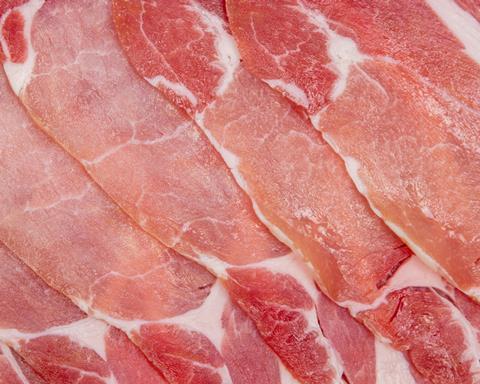
If Wiltshire cured bacon had been produced somewhere in Italy, there would be defence leagues, guilds and local politicians to uphold this great food tradition. Alas, in the UK, despite the many claims of a “food revolution”, the defence of iconic products does not extend to the authorities. The current Protected Status scheme, inherited from the EU, is without the aura and clout of its European counterpart. It includes 15 fresh and six processed meat products. Most recently, New Forest Pannage Ham was added to the list.
Wiltshire cured bacon, a product with a historical pedigree and standards set in the 1970s, deserves such protection. The British Meat Processors Association (BMPA), for the last seven years and against staunch opposition from Defra, has sought to get this tasty heritage protected. The 16-page final judgement, issued in March, acknowledges that “the parties agree that ‘Wiltshire Cure’ originated in Wiltshire in the latter part of the 18th century. It is a well-established traditional English method of curing pork in live brine that has remained largely unchanged in recent decades”. Yet, the judges have dismissed the appeal, despite the comprehensive dossier prepared by the BMPA, Defra having only provided “skeleton” evidence.
The judgement debates whether brining was invented in Ireland, Denmark, Germany or Russia. This is not the point for this historical product. One can produce bacon with a sterile brine and immersion, but it is definitely not Wiltshire cured bacon, which relies on live brine.
I used to work at Defra as meat trade adviser in the 1980s, guiding civil servants in technical, scientific, marketing and economic matters regarding the UK meat supply chain, including during the BSE crisis. This position does not exist anymore, but I can vouch I would have fought doggedly and won the argument against inanity. I simply do not believe that current administrators at Defra have the required expertise to tell curers how to produce bacon and ham.
This missed opportunity contrasts with Italian attitudes to food. Despite much poorer land than the UK, Italian food, with its hundreds of protected names, image of quality and traditions, goes from success to success in exporting added-value products, including cured meats such as Parma, San Daniele and Toscana ham.
Food for thought.