


A line-up of speakers including NFU president Tom Bradshaw and Kate Nicholls OBE, chair of UKHospitality, featured at the Association of Independent Meat Suppliers (AIMS) annual conference at Butchers’ Hall, marking the trade body’s 25th anniversary.
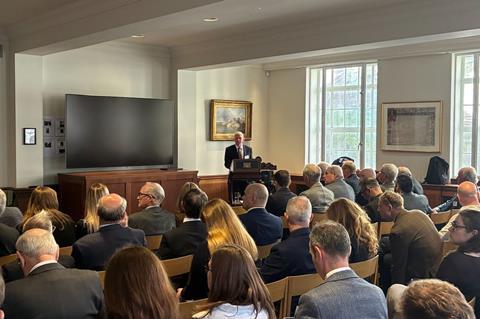
The issues pressing the UK’s meat industry were brought to the fore at the 2026 AIMS meat industry conference at Butchers’ Hall.
AIMS non-executive director and event chair Jason Feeney CBE opened proceedings to introduce the agenda for the trade body’s 25th-anniversary event, which examined the challenges facing the food industry under the title of ‘how ow to maintain credible food safety assurance while the economic and structural pressures across the supply chain continue to intensify’ with a line-up of speakers addressing the issues from farm to fork.
Jason Aldiss, AIMS executive director, gave the opening address to the conference, focusing on increases to official inspection charges and the issues of outdated inspection practices and planning barriers. He set out parameters for a modern inspection system, saying it must be risk-based, data driven, outcome-focused and proportionate. Download his full speech below.
The outlook for farming
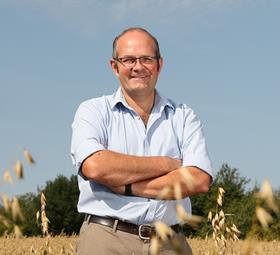
National Farmers’ Union (NFU) president Tom Bradshaw delivered the first presentation and set out the outlook for UK farming and livestock production and the implications for long-term food security.
Bradshaw spoke on how geopolitical issues are affecting the resilience of the farming sector, warning that disruption of supply chains caused by the war in Iran, and consequent weakening of the flow of essential raw materials for farmers, already has long-term implications.
“If we work together, we might well be able to find some solutions.”
Tom Bradshaw, NFU
Commenting on the conflict Bradshaw said: “When you’ve got a global crisis like this, there’s a tidal wave that’s been triggered, and the epicentre gets bigger and bigger - the longer that this goes on, the longer it takes to get back to any sense of normality.”
Closer to home, he discussed the difficulties caused by planning, which he called a “blocking policy”, and the issue of falling livestock numbers. Bradshaw stated that the declining beef herd was of particular concern, as was the knock-on effect for abattoirs, saying that it is vital we don’t lose abattoirs as part of our critical national infrastructure. Bradshaw commented that a combined effort will be needed to support the food system: “No one of us in this supply chain is going to sort it out, but if we work together, we might well be able to find some solutions.”
Bradshaw also highlighted the threat the system faces from illegal meat imports estimating the potential cost of a foot and mouth disease outbreak at £16 billion, with no contingency to pay for that.
Modernising meat inspection
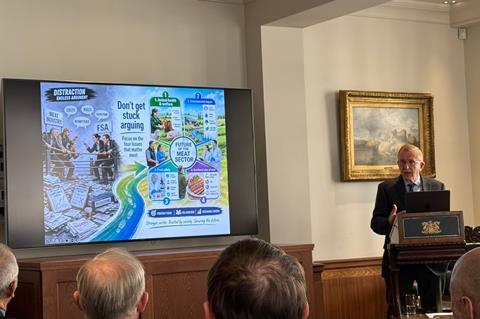
The agenda next moved on to regulation and the modernisation of the official control regime, including how the regulatory framework can evolve to meet the needs of the modern food system, with Dr Patrick Wall, professor of public health at University College Dublin (UCD) and member of the UCD Institute for Food and Health, addressing the delegates.
Dr Wall was the first chief executive of the Food Safety Authority of Ireland (FSIA) and a founding member of the management board of the European Food Safety Authority (EFSA). His areas of research include food safety, nutrition and managing lifestyle-related disease. He shared his expertise in the area of food safety and meat inspection with delegates speaking about the use of scientific evidence to support inspection systems, providing international perspectives and outlining alternative approaches to delivering food safety assurance within advanced meat exporting nations.
Wall urged industry against “endless argument” advising a focus on four issues that matter most for the meat sector:
- Animal health and welfare
- Environmental impact
- Food safety
- Nutritional value of meat
Retail and hospitality sector perspective
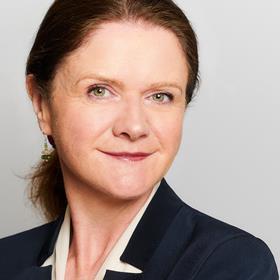
Completing the overview of the system from farm to fork, UKHospitality chair Kate Nicholls OBE gave the final presentation of the conference. Nicholls joined UKHospitality as CEO at its inception in 2018 before moving into the role of chair. She worked previously as CEO and strategic affairs director of the Association of Licensed Multiple Retailers (ALMR) and sits on the Government’s Tourism, Hospitality and Food & Drink Sector councils.
Nicholls’ presentation examined the wider economic challenges affecting the food system, bringing in the perspective of the hospitality sector and highlighting the impact of rising operating costs, labour shortages and cost-of-living pressures on businesses and consumers.
She spoke about the importance of strong links throughout the supply chain to strengthen the whole system and how the sector, which collectively is one of the largest employers in the country, can come together to show that the food industry is a good place to invest. She commented: ”Whichever part of the farm-to-fork supply chain we are in, we have to be promoting ourselves as a sunrise industry with opportunities for good-quality jobs.”
To close the conference, AIMS Norman Bagley founder and principle adviser for AIMS gave a presentation to retiring chair John Thorley, thanking him for his tenure at the trade body.