


The four farming unions across the UK have called for Government to urgently prohibit imports of Brazilian meat and align with EU restrictions which come into force imminently.
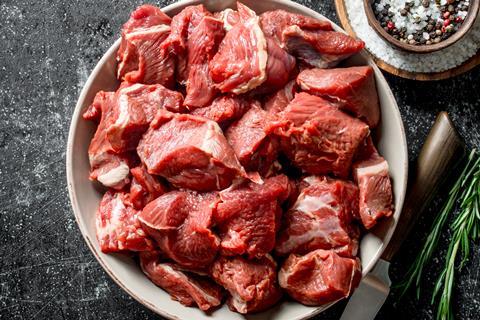
In a joint letter to Defra Secretary of State Dame Angela Eagle, the National Farmers’ Union (NFU), NFU Scotland, Ulster Farmers’ Union and NFU Cymru have called for a UK-wide ban on Brazilian Products of Animal Origin (POAO) from 3rd September, warning that failure to act could put public health, farm businesses and public confidence in UK food at risk.
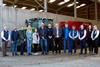
The letter was signed by NFU president Tom Bradshaw, NFU Scotland president Andrew Connon, Ulster Farmers’ Union president John McLenaghan and NFU Cymru president Abi Reader.
The call comes following Brazil’s inability to demonstrate compliance with EU rules on antimicrobial resistance (AMR), which are designed to prevent the development of antibiotic-resistant infections. The ban also applies to a number of European Economic Area (EEA) countries, including Norway.
The use of antibiotics for growth promotion has been banned in the UK and EU since 2006. According to the unions, UK farming has also made major progress in tackling antimicrobial resistance, voluntarily reducing the use of antibiotics by almost 60% since 2014 and only using antibiotics when there is a clinical need. The use of antibiotics deemed critically important for human health has fallen by 83%.
In the letter, the unions warned that failure to act would undermine this progress, leave public health exposed to AMR and threaten public confidence in the beef and poultry sectors. The organisations outlined the “significant risk” of consumers not being aware of what they’re eating, as most Brazilian meat goes into the UK’s food service sector, which does not require country of origin labelling.
The unions highlighted that not only does this risk making Britain a target market for Brazilian beef and poultry displaced from the EU but will “undermine the high standards rightly expected of UK farmers” and risks damaging public trust in the food sold in Britain.
“Failure to act will not only expose the nation to a public health risk, but damage consumer confidence in beef and poultry as a whole.”
UK farming union presidents
The UK farming union presidents jointly stated: “Ensuring the health and safety of the nation is a core responsibility of any Government and the UK has long recognised the risks posed by AMR. UK farmers have worked hard to cut antibiotic use and maintain some of the highest production standards in the world – we should demand the same of our imported food.
“Failure to act will not only expose the nation to a public health risk, but damage consumer confidence in beef and poultry as a whole. Combined with the additional complications it would cause trading with our farming colleagues in Northern Ireland and the very real threat of Brazilian meat being diverted onto the GB market, it would only pile further pressure on producers here at home.
“The absence of any government response is unacceptable, particularly when there is a direct risk to public health and credible reports of significant disruption across the GB supply chain.
“We have less than a week until the bans in the EU and EEA countries come into force. The UK Government must take action now to protect the British public from the health risks posed by antimicrobial resistance, maintain public trust in our food system, and show our farmers it backs homegrown food production.”
The UK farming unions are asking Government to:
- Prohibit the import of all Brazilian POAO from 3rd September 2026 until Brazil can demonstrate that all meat exported to GB is being produced responsibly
- Conduct a thorough, in-person audit of Brazilian production and traceability systems
- Increase the rate of checks on Brazilian POAO entering the UK, including randomised and risk-based sampling, to ensure imports do not contain prohibited residues
- Establish a wider UK framework of core production standards, applying to domestic and imported agri-food products equally to prevent domestic producers being undercut by food produced using methods, such as the use of antimicrobials for growth promotion, that are illegal in the UK.