



A report from The Wildlife Trusts has claimed that there are “significant inaccuracies” in poultry data used to inform Government policies on land, manure and pollution management in England.
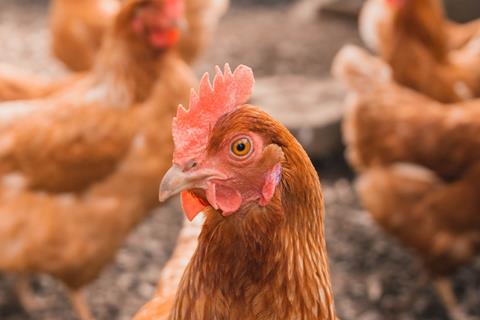
The report, titled ‘Counting Chickens - An analysis of UK poultry numbers’, was published by The Wildlife Trusts after the charity submitted multiple Freedom of Information (FOI) requests, and was said to show “major discrepancies” in the number of chickens reportedly housed in the areas it analysed.
According to The Wildlife Trusts, at least 25 million chickens in Lincolnshire, Norfolk, Shropshire and Herefordshire were missing from the data used by Government departments. It said this could lead to impacts on water pollution, nature and land use being ignored due to unreported chicken manure.
Vicki Hird, strategic lead on agriculture at The Wildlife Trusts, stated: “Our new research shows that in England alone, these inaccuracies could mean an undercounting of poultry by at least a third, with huge impacts on our natural world, as well as on the health of the rivers and waterways we all enjoy for bathing and drinking water.”
BPC labels claim as “inaccurate”
A spokesperson for the British Poultry Council (BPC) commented: “The Wildlife Trusts has looked at three separate Government data sets, each collected for different reasons and using varying methodologies. In that circumstance there will inevitably be differences in the data. The Wildlife Trusts has leapt on that difference to invent a story about unaccounted for birds.
“As the industry, we cannot speak to the veracity of Government data, but we can see when it is being manipulated, and the words ‘could’ and ‘might’ are doing much of the work in the report.
“This confection is nothing more than a vehicle to repeat the inaccurate claims about poultry farms letting manure cause water pollution. All indoor poultry farms that operate under strict environmental permitting, and therefore regulated by the Environment Agency, have concrete floors. There is no direct contact with the soil and all manure is managed responsibly, whether for fertiliser or energy generation.”
Defra welcomed the report into the review of the poultry industry and the review of Government poultry data. A Defra spokesperson said: “The data sets for poultry are collected for different reasons, gathering wide ranging evidence of trends and fluctuations in the sector.
“What matters is the action taken to tackle pollution, with the Environment Agency conducting on-farm inspections and working closely with the agriculture sector to reduce pollution.”