



There comes a point when regulation ceases to protect the consumer and becomes an industry in its own right. Post-Brexit veterinary border controls risk crossing that line, says AIMS’s Jason Aldiss.
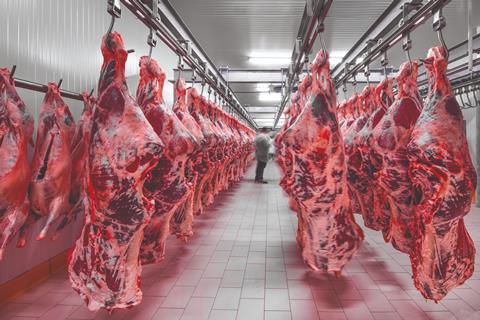
British meat exporters face increasingly intrusive inspections, including requirements concerning the movement of hanging carcases inside vehicles. AIMS has instructed French lawyers to challenge the proportionality and practical implementation of these measures.
Meanwhile, concerns about lead and increasingly minute defects are generating further obstacles.
If lead is the concern, let us have scientifically defensible surveillance. Test British product, certainly, but apply comparable scrutiny to comparable risks across other supply chains, including Eastern Europe, and publish results by origin.
Anything else risks becoming trade control masquerading as public-health protection.
Then there is wool.
Anyone familiar with sheep processing knows that occasional wool fibres are an international dressing challenge. Inspect carcases elsewhere with the same intensity and defects will also be found.
This is no argument for relaxing hygiene standards. It is an argument for distinguishing meaningful food-safety hazards from minute imperfections, whose significance must be assessed proportionately.
Are we protecting consumers or protecting bureaucracy?
Brexit created certification, inspection jobs and infrastructure that UK-EU trade did not previously require. Those structures now have an institutional interest in their continuation.
British Official Veterinarians sign thousands of Export Health Certificates (EHCs) attesting, in many cases, to standards already embedded in established production systems. Parliament was told in May that 52,500 certificates were produced in the first quarter of 2026, costing more than £10.5 million. Since December 2020, the reported cost of producing EHCs approaches £300 million.
That is money spent administering trade, rather than producing food, improving welfare or developing exports.
And certification is only part of the bill. Delays require refrigeration, driver hours and vehicle movements. Product deteriorates. Rejected consignments generate waste. Additional journeys increase emissions. Uncertainty undermines customer relationships and discourages exports. The costs travel backwards to farmers and forwards to consumers. Food security suffers.
Our profession must confront its own position. Certification has become a substantial source of veterinary income. That does not make the work improper, but it creates a responsibility to demonstrate proportionate sanitary benefit.
We cannot advocate evidence-based veterinary medicine while defending bureaucracy because veterinarians are paid to administer it.
The test should be straightforward: what additional protection does each requirement deliver, against which demonstrable risk, and at what cost? Where authorities cannot answer those questions convincingly, the intervention needs reconsideration. A system should be judged by measurable outcomes, including the consequences of delaying safe, perishable food, rather than by the volume of paperwork it generates or the number of consignments it stops.
Border controls should manage demonstrable differences in risk, not search ever harder for technical reasons to stop otherwise wholesome food.
A new UK-EU SPS relationship offers an opportunity to dismantle unnecessary barriers while maintaining robust standards.
We should take it.
A border system that increases waste, emissions, bureaucracy and cost must justify the protection it provides.
If that additional protection is negligible, the system is not merely inefficient. It is worse than useless.