



A new sanitary and phytosanitary (SPS) deal was agreed at the UK-EU Summit in Brussels, with Government aiming to cut red tape and back British production.
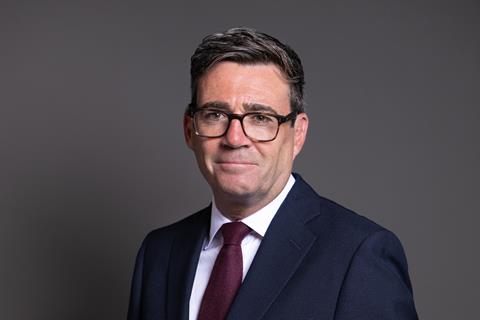
Prime Minister Andy Burnham met with European leaders at the UK-EU Summit in Brussels to deliver a deal with the intention of cutting costs, keeping prices down and opening up opportunities for young people.
Government said that as a result of closer cooperation with the EU, the UK economy is expected to expand by billions.
Under the agreement:
- Costly paperwork will be scrapped, aiming to save businesses money on every consignment.
- Border checks will be removed, with the intention of getting food to market more quickly.
- British products previously banned from the EU market will regain access.
- Animal welfare and biosecurity protections will remain and information sharing will improve.
Businesses moving food and plants between Great Britain and Northern Ireland will also experience significantly reduced bureaucracy and checks.
European Union Relations Minister Hamish Falconer said: “Business across the country have been clear, our current deal with the EU is not good enough.
“From binning excessive paperwork holding back our exporters, to creating new opportunities for our young people to learn, thrive and succeed, our work today will make a difference to businesses, farmers, families and households across the UK.”
“Removing these barriers will make a real difference, freeing up millions of pounds that businesses can put to better use.”
John Powell, BMPA
John Powell, chief executive of BMPA, said: “This is a hugely welcome breakthrough for British meat businesses. For nearly six years, our industry has been battling a mountain of paperwork, unnecessary costs and border delays simply to trade with our nearest neighbours.
“Removing these barriers will make a real difference, freeing up millions of pounds that businesses can put to better use investing in jobs, technology and growth.
“We congratulate the Government and Defra on securing this agreement and particularly welcome the constructive way they’ve worked with our industry throughout the negotiations to understand the priorities and practicalities involved. The priority now is a smooth transition, with clear guidance and practical support to help businesses prepare for the changes ahead.”
IMTA labels deal a “huge step forward” for EU traders
Katie Doherty, IMTA CEO commented: “Today’s announcement represents a huge step forward for our members trading with the EU. Upon implementation they will see the costs of trade decrease and uncertainty at the border be alleviated. We hope to see volumes of trade recover following a decline post-Brexit. Much remains to be seen on how the deal will impact those trading with the Rest of World, so we will monitor developments closely and ensure our members are up to date on topics such as goods on the market arrangements.”
NFU welcomes agreement
National Farmers’ Union (NFU) president Tom Bradshaw said: “British farming was always going to be on the frontline of any new UK-EU agri-food trade arrangement. That’s why we’ve pushed from the very beginning for this deal to improve trading conditions for importers and exporters, while supporting growth and innovation and ensuring businesses have enough time to adapt to new rules. We welcome the efforts from ministers in prioritising these areas within the negotiation.
“Reducing friction and costs at the border should help farm businesses that depend on access to EU markets. However, rebuilding lost exports will take time, as in many circumstances British products have been replaced by goods from elsewhere. That’s why the appointment of three new agricultural trade specialists in Europe and a further three in England to boost exports to the EU is so important and is great news.
“Reaching this agreement is only the beginning. Its success will ultimately depend on how it is implemented and the UK Government’s ability to influence future EU rules that work for British farmers.”
Pros will “largely outweigh the cons”, says PTF
Rod Addy, director general of the Provision Trade Federation (PTF), stated: “Getting closer to the EU, our largest and closest trading partner, after the mess that was Brexit is a no-brainer. The food industry alone has lost billions of pounds in exports and related costs since the Brexit transition. However, this is a complex negotiation involving many aspects that sit outside of food and drink, including an energy deal and youth mobility.
“We still don’t know at this stage what the exact shape of the food deal will look like. There will be trade-offs, unintended consequences for parts of the industry and teething problems as the system beds in. Our task will be to help Government minimise the pain. That said, we believe the pros will vastly outweigh the cons. Our only frustration is the amount of time it will take for benefits to be felt, which could be sped up. Change cannot come soon enough for food suppliers hit by so much unnecessary cost and paperwork.
“As for the lack of influence the UK will have in EU food law, this is a largely spurious argument. The UK has not substantially diverged from EU law since 2016 and must conform to EU regulations to trade with it anyway. Most of these laws are sensible and science-based in any case. And if we had never left the EU in the first place, we would have had more say.”
AHDB highlights opportunities for exporters
Sarah Baker, head economist at the Agriculture and Horticulture Development Board (AHDB), said: “For many levy payers, particularly in the beef, lamb and dairy sectors, the prospect of lower certification costs, fewer border checks and easier access to EU markets will be welcomed. The EU remains our closest and most significant trading partner for meat and dairy exports, and growing demand in these markets creates long-term value for our levy payers.
“However, while there are clear opportunities for exporters, it is important that the implications for all agricultural sectors are fully understood. Several important questions remain around how regulatory alignment will operate in practice, particularly in areas such as crop protection and future agricultural innovation. This will require careful consideration, and growers will need clarity and sufficient time to adapt to any changes. AHDB will analyse the details of the agreement over the coming days and weeks and the potential implications for our levy payers across all sectors.
“As the detail emerges, it will be important to ensure that the benefits of smoother trade are realised while maintaining the competitiveness and productivity of UK farming systems. We will work with Defra to help ensure the practical implementation of any changes delivers real benefits for levy payers across the industry.”
Meatly describes deal as a “really positive signal” for the global cultivated meat sector
Owen Ensor, co-founder and CEO of cultivated meat brand Meatly, said: “The carve-out shows that the UK wants to be a place where innovation thrives. We have just created Europe’s largest cultivated meat facility here in the UK, and this decision helps to give us conviction to build industrial facilities here in the future, creating jobs and food security here in Great Britain.
“More broadly, this is a really positive signal for the global cultivated meat sector. The transition period in today’s deal shows that the UK Government and regulators are committed to keeping pace with innovation and ensuring the UK remains a place where pioneering food technologies should be located, developed, and commercialised.
“Britain has more experience regulating these products than anyone else in Europe. We were the first country in Europe to put cultivated meat on sale, in pet food, because Defra, the FSA and DSIT made sensible, science-led choices. This means there is a real opportunity for the UK to help educate our European counterparts on these technologies and shape evidence-based regulation internationally.
“The world faces big challenges. Food resilience and sustainability are the most urgent. Meeting them means pioneering new ways to make protein and investing to scale them up. The next three years are a huge opportunity where British expertise can now help shape the rules for a market of 450 million people.”