


The National Sheep Association (NSA) has stated that sheep farmers will “welcome the clarity” over the direction and priorities of the Department of Environment, Food and Rural Affairs (Defra) brought by the publication of the Farming Roadmap 2050.
NSA said this followed “years of uncertainty”, and said farmers would be ready to “meet the challenge”.
According to NSA, the Farming Roadmap positioned agriculture at the “heart of the answer to many of society’s resource questions” following the Brexit vote in 2016.
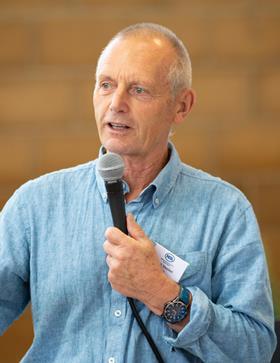
NSA chief executive Phil Stocker MBE commented that the document is best enshrined to ensure stability through changing administrations in a “volatile and predictable” world: “NSA welcomes the new Farming Roadmap and looks forward to working with the Government and Defra to embed more detail and start to talk about practical implementation, but longevity is key. Commitment to long-term agricultural policy must be long-term to make a meaningful and positive difference.
“The Farming Roadmap is aspirational in its vision for profitability and moving towards reducing reliance on support. This is something we can all aim for, but we should recognise the challenges of rising costs and supply chain pressure to manage food inflation. That said, aspiration is a good thing, and this gives us a much-needed sense of direction.”
NSA welcomed the roadmap’s ambition to connect farming with other existing plans for food, climate change, and environmental ambition, as well as discuss lower emission farming systems, and promote flock health and the Animal Health and Welfare Pathway. It also welcomed the idea that nature can be delivered through food production “rather than in spite of it”.
Michael Priestley, NSA policy manager, stated: “More will become clear over time as to how the sheep industry can work with this flagship document. At this early stage we have questions over how spatial targeting of funds will work.
“NSA’s view is farmers who work the land are well-placed to develop plans and feed into scheme design, not just in the development and road-testing but in the onwards monitoring and tweaking of schemes. This could signal a new era for more relevant and less generic and prescriptive agri-environmental options and could come in time at a critical time for our upland sheep sector.”