



Quality Meat Scotland (QMS) has reported that Scotland’s lamb sector has entered 2026 with “renewed momentum” after experiencing “early-year softness” to deliver higher prices despite improved throughput.
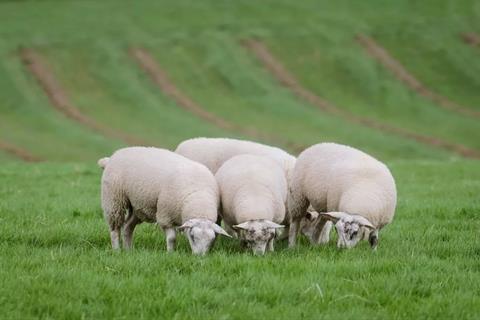
QMS said this was supported by “strong” domestic demand and a “resilient” export position, setting an optimistic tone for the year.
After easing in January, Scottish lamb prices rose sharply through February, driven by increased demand for Ramadan. Towards the end of Ramadan, prices then surged higher, as Easter approached.
QMS found that prices began the year slightly behind 2025 levels but overtook them by late-February and stood around 30% above the five-year average in the second week of March. In the third week of March, prices averaged above £4/kg lwt, 20% higher than in the same week of 2025 and 35% above the five-year average.
Scottish throughput increased over Christmas, and numbers increased by 8% on the year in the first 11 weeks of 2026. Numbers reached a season-to-date high at Scottish marts in the second week of March, and were the third highest of the season in the latest week.
According to QMS, this uplift was supported by a slightly larger Scottish lamb crop, slower marketing through the autumn, and strong store lamb sales. At a GB level, supply remains “fundamentally tight” due to a 2.5% reduction in the 2025 lamb crop, although an earlier Ramadan and Easter are expected to have supported slaughter volumes in March.
Sheep meat exports
UK sheep meat exports continued to rise through the final quarter of 2025, dipping only slightly year-on-year in December. For 2025 overall, export volumes grew by 9% despite elevated prices, underscoring strong demand, especially from France and Belgium.
QMS reported that the new year began with a year-on-year export growth rate of 9% in January, with almost 95% of the volume destined for the EU. Imports ended 2025 recording their first increase since July, with Australian volumes rising sharply while New Zealand shipments declined. This import growth continued into 2026 with volumes at a seven-year high for January. QMS highlighted that only 13% of import volumes arrived from the EU.
Imports from New Zealand were down “marginally” on January 2025 but still accounted for 48% of the monthly total, whereas there was a 61% uplift from Australia, with deliveries accounting for a 38% share. UK domestic production increased by 2% during 2025, but higher net exports meant total UK market supply ended 2025 broadly aligned with 2024 levels. Supply then began 2026 at a similar level to January 2025.
QMS said that international supply trends pointed to “tight conditions persisting”, EU production continues to decline structurally, while Australia has likely passed its cyclical production peak. New Zealand’s 2% uplift in lamb crop is expected only to stabilise slaughter numbers rather than expand them. A rebound in Chinese demand may also boost Australasian export flows, said QMS, shaping global competition in the months ahead.
Energy prices rise yet feed costs are “steady”
Despite geopolitical tensions having limited impact on energy markets through 2025, oil prices have been pushed up since the beginning of the US-Iran conflict, and it remains to be seen if this rise becomes sustained. Natural gas and fertiliser costs remain elevated in Europe, which QMS said was due to constrained Russian gas supply, though feed costs have been steadier due to strong global crop prospects.
Currency movements have been “broadly supportive” for the sector, with QMS stating that the sterling’s weakness against the Euro has bolstered the competitiveness of UK exports, while its relative strength against the US dollar has helped cap some input inflation.
Winter spending on red meat rose significantly, even as rising prices reduced overall volumes. Beef inflation has pushed shoppers toward cheaper proteins, but lamb and pork have achieved “solid results” at retail level, particularly lamb.
QMS said the wider economic environment remains mixed, with early signs of stronger private sector activity countered by a softening labour market. It also highlighted that consumers had reported weaker confidence around personal finances despite easing inflation.
Underlying pay growth sits around 4%, supporting household spending, although the current energy and fuel price shock has the potential to generate significant headwinds, QMS said. However, in the short-term, the energy price cap is falling in April and the UK is approaching a seasonally lower period for heating use.

Iain Macdonald, market insights manager at QMS, commented: “The early strength we’re seeing in lamb prices and auction throughput highlights the resilience of Scotland’s sheep sector in the face of tight global supply and a challenging economic climate.
“While risks remain – particularly around energy markets, currency shifts and household spending power – the strong seasonal demand and firm export interest put the industry on a solid footing as we move further into 2026.”