


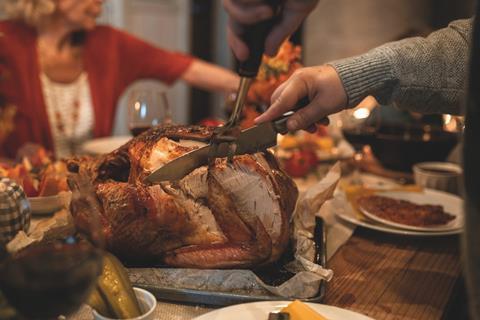
Retailers saw highest spend in the fresh meat category over the Christmas period, as industry looks back at how the meat industry performed in 2025.
Over the four weeks to 28th December, Worldpanel by Numerator recorded take-home sales at UK grocers of £13.8 billion – this was up 3.8% on the year.
It found that grocery inflation had “eased slightly” to 4.3%, offering a “modest relief” to shoppers who spent £476 on average at the supermarkets during the festive month.
Overall, Worldpanel by Numerator found that Monday 22nd December was the busiest day for grocery sales, but shoppers made the most trips on Tuesday 23rd December, spending less but topping up on last-minute festive essentials.
Sales of premium own label continued to rise, with growth of 9% taking a significant 7.5% of overall sales, up from 7.1% last year. For the first time, supermarkets’ premium own label lines exceeded the £1 billion milestone in December, with these products finding their way into 92% of shoppers’ baskets. The highest spend was seen in fresh meat (£115 million in sales) and chilled snacks like finger food, dips, and antipasti (£80 million in sales).
While traditional, large format supermarkets accounted for 60.3% of sales over the four-week period, discounter retailers saw their biggest ever share of sales at Christmas, reaching a total of 16.8%. More British households turned to online channels for their shopping too, with online retail growing at 7.5% and reaching a total share of 12.2%.
Fraser McKevitt, head of retail and consumer insight at Worldpanel by Numerator, said: “Easing inflation helped to take the edge off the cost of Christmas this year, giving households a little more room to spend. It was a Christmas of smart savings and considered choices – almost every household bought into supermarkets’ premium ranges, while price remained front of mind. Discounters enjoyed their biggest-ever Christmas share, and shoppers leaned on their loyalty cards to get the best deals.”
At online retailer Ocado, the company reported an “incredible year” with sales growing 21.3% on the year. A 30.5% increase in chicken sales was attributed to changes in welfare standards across the category, driven by M&S products. The retailer said that natural protein sources were making a comeback as customers increased their protein intake in 2026.
Tom Bryan, meat, fish, poultry and eggs trading manager at Ocado Retail, stated: “We’re predicting customers will turn to increased portion control as they turn to healthier lifestyles. Customers are also turning to more sustainable options, with our organic range performing particularly well as we continue to offer promotions.”
NCB foresees demand for convenience after “good” Christmas results
National Craft Butchers (NCB) managing director Eleanor O’Brien called 2025 a “mixed bag”, as there were struggles as well as successes across the retail butchery sector.
O’Brien commented: “Further cost pressures from increases to NI and minimum wage, along with a hugely volatile beef market, made for a tough first quarter with already stretched profit margins taking a hit.
“For most of our members, the good weather meant a successful BBQ season, and reports for Christmas so far show good results, with most having increased turnover.”
Looking ahead, a snapshot survey by NCB showed that the majority of its members reported feeling “somewhat confident” about 2026. NCB highlighted that clarity from the winter budget, as well as employment rights bill changes, mean that its members can plan for 2026.
O’Brien said that trends for 2026 would likely include:
- Continued increase in demand for ready meals and luxury convenience food
- Increased popularity of South American flavour profiles
- Consumers looking for nutrient-rich food and steering away from ultra-processed foods.
Similarly, butchers Owen Taylor & Sons Ltd said Christmas was a “challenging but successful season”, with its retail operations “running smooth” as it saw a “reasonable sales uplift” from the year prior. Within its catering division, Owen Taylor & Sons felt that there was a lack of large parties, but still a good demand for meat.
The shop observed an increase in younger customers, and predicted that for 2026 this may continue, provided the shop highlights eating well, food origins, welfare and sustainability on its social media channels.
Cooked meat manufacturer Kings Fine Cooked Meats called Christmas 2025 “extremely busy and very successful”, with demand for its festive products “through the roof” and its turkey sales showing solid year-on-year growth despite an “operationally demanding” period.
Looking towards 2026, the company said clean-label innovation was likely to remain a major trend, with “growing demand” for products that feature reduced additives and simpler ingredient lists without compromising on taste or shelf-life.
Trade bodies warn of challenges to supply

The British Meat Processors Association (BMPA) stated that in the run-up to Christmas, shoppers turned to quality, value and convenience when making their purchases. Volumes were “broadly flat” on the year, with BMPA observing heavy discounting in some areas.
Nick Allen, chief executive of BMPA, said: “Across the supply chain, lower cattle and sheep throughput reinforced tighter supply and underpinned prices. Strong export performance, particularly for lamb and pigmeat beyond the EU, was another standout theme of the year.
“Retail price inflation, particularly for beef, was a defining feature of the year, which continued to bite, with shoppers clearly feeling the pressure as volumes dipped and value sales took the strain. Data show that fresh meat prices overall were up sharply year on year, with beef leading the way with a 13% increase. In fact, lean mince passed the £10/kg mark over the summer. Lamb saw a similar story, with higher prices dampening demand and volumes falling despite rising average values.”
BMPA predicted that for 2026, there would be no “quick fix” for falling cattle numbers, and said retail and foodservice prices were likely to stay high, with some consumers trading down or switching proteins.
Charlotte Forkes-Reese, retail and consumer insight analyst at the Agriculture and Horticulture Development Board (AHDB), commented: “2025 was a year of contrasts for red meat. Rising prices and tighter household budgets shaped buying habits, yet demand held firm for key occasions. Beef and lamb saw notable price rises and reduced promotional support by retailers throughout the year, resulting in a dip in overall demand. Meanwhile, pork remained a value anchor for red meat, with shoppers trading into the protein for its affordability as well as health and taste credentials.
“Seasonal and special-occasion demand remained resilient, showing that tradition and trust still drive purchasing. For the industry, the opportunity lies in balancing value with quality cues; emphasising taste, versatility, farming provenance, and practical formats to meet evolving consumer needs.”

Chief executive of the Livestock and Meat Commission (LMC), Colin Smith, looked at Northern Ireland’s market in 2025: “Tight supplies and robust demand brought high prices for producers, with profitability also boosted given feed costs remained comparatively low. Since January, beef prices are up over 25% (139p/kg). Despite this, uncertainty around regulation will influence the willingness of producers to invest in growth or maintain production.
“In the longer term, policies that allow improvements to farm infrastructure, profitability, and efficiency will all be required to deliver stability of NI and UK cattle supplies and increased food security.”
Smith continued: “While the buoyant market of 2025 was welcomed, we remain wary of challenges on the horizon which may affect markets here, including disease pressures, global trade deals, tariffs and the risk of increased displacement of traditional export markets. At times like this, the quality and high standards of locally produced beef and lamb will be a key driver in keeping NI products in consumer shopping baskets.”
Will Allen, policy manager at the International Meat Trade Association (IMTA), said: “2025 was a year of more turbulence for the meat trade, although disruptions this year were more linked to animal disease than pandemics or conflict. We began the year with FMD outbreaks in Europe and are ending the year with ASF in Spain; sandwiched between those we saw major poultry exporters grapple with disease restrictions as Brazil faced its first commercial HPAI outbreak in poultry, and many parts of Europe have seen ongoing HPAI and Newcastle Disease outbreaks.
“All of these events have significantly impacted on imports to the UK, and traders have also had to navigate the additional unpredictability of Trump’s regular tariff threats and announcements. In times of volatility, having a diverse range of import sources is vital to mitigate risk and protect UK food security; particularly when domestic supplies are tight, as is the case for beef currently which has seen extraordinary price increases this year.”