


The Government may hope the animal welfare strategy brings a welcome boost to its election prospects, but will the reforms deliver real benefits or just more red tape, asks JP Garnier.
According to Government figures, Farm Business Incomes (FBI) 2024/25 for lowland beef and sheep enterprises in England have leapt from £18,500 to £41,300, while upland grazing farms saw incomes rise to £40,300. Obviously, Secretary of State for Environment, Food and Rural Affairs Emma Reynolds has seized on this as “fantastic news”. The reality is that FBI covers all diversification activities, up 17% and used by 70% of farming enterprises according to Government, and environmental support schemes, meaning that, as regards food production, producers of lamb and beef cattle are, at best, breaking even.
The sharp rise of farmgate prices is largely due to domestic shortage of beef and sheep meat, itself the consequence of damaging farming polices. The Minister’s unwarranted satisfaction also misses an important element of beef production: the dairy sector – as milk prices, falling below production costs, threaten a new exodus of farmers from the industry.
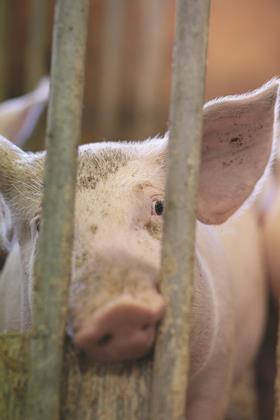
What is Government now planning in its destructive drive? Enter the “biggest animal welfare reforms in a generation”, presented in December. Certainly, mentions of protecting “treasured pets” and “much-loved wildlife” aim to boost the Government’s electoral prospects, now at a low ebb. More seriously, the proposed measures for farm animal welfare are extensive and will have severe consequences for the pig and poultry sectors. It also confirms, if needed, the stranglehold the animal welfare lobby has on Whitehall. The document says that in a “new, integrated approach”, the “Government will work in partnership with key stakeholders, charities, experts, enforcement bodies and industry”. Note that industry comes last, and, as usual, consultation with people directly involved has been scant.
Trying to justify the regulatory blitz, the paper mentions that “poor animal welfare is linked to health issues and can lead to loss of livestock and financial losses to farmers. For example, endemic diseases in cattle, sheep, and pigs cost over £300 million annually”. This debatable figure includes diseases such as PRRS in pigs, gastro-intestinal parasites, footrot and scab in sheep and BVD in cattle. I do not see how the proposed measures will lower these animal health costs. The Government also praises the Better Chicken Commitment, oblivious to its failings.
The paper presents a long list of proposed measures: enriched “colony” confines for laying hens and sow farrowing crates will be banned; the welfare of cattle and game birds will be “improved”; CO2 stunning of pigs will be banned, as will the killing of day-old chicks; management practices for pigs and sheep will be “reduced”; transport conditions will be revised; the move away from fast-growing chickens will be encouraged; labelling of animal welfare standards will be explored. The paper also includes a lengthy chapter on chastisements, described as “enforcement”.
It further says, “the Government’s aim is that animals should only be transported if it is necessary”. Among my farming friends, I do not know any who would load livestock for leisure trips!
The practicalities of banning farrowing crates and CO2 stunning are not considered. Regarding CO2 stunning, National Pig Association (NPA) chief policy adviser Katie Jarvis says that “there are no viable alternatives”. Although idealistic and, in some instances, desirable, the proposed measures will add costs and burden to the already struggling British production of eggs, milk, poultry, pork, lamb and beef. The paper does not once mention the impact on competitiveness, as if Britain is an island. It may be geographically, but it is not in terms of trade, as we import an ever-growing share of our food, and exports remain essential.
In 2011, the McDonald report on agriculture recommended that Government minimise regulations and refrain from introducing more red tape. Fifteen years on we still veer the opposite way.