



The latest Worldpanel by Numerator grocery market share update shows overall price inflation held steady at 4.7% over the month to 30th November, with prices rising fastest in markets including fresh meat and value added poultry.
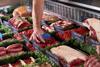
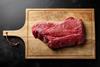
Figures from Worldpanel by Numerator (formerly Kantar Worldpanel) reveal that grocery price inflation held at 4.7% over the four weeks to 30th November, while take-home sales rose below inflation by 3.4%. The figures, based on more than 75,000 products compared year-on-year, show that prices are rising fastest in categories including fresh meat (unprocessed) and added value poultry.
Worldpanel reported that retailers are ramping up investment in promotions to encourage shoppers through their doors in the run-up to Christmas, with sales expected to exceed £13.6 billion in December.
The data for November shows 31.2% of spending was on promoted items, up from 30% at the same time last year.
Fraser McKevitt, head of retail and consumer insight at Worldpanel, commented: “Retailers are pulling out all the stops to win shoppers over as they gear up for one of the most important trading periods of the year.
“One in five households tell us that they’ve been struggling financially and that’s been largely consistent over the past two years. With the cost of living still biting for many this Christmas, just under one third of all spending is on promotion as supermarkets find ways to shield shoppers from the impact of price rises.”
Christmas dinner is cheaper this year
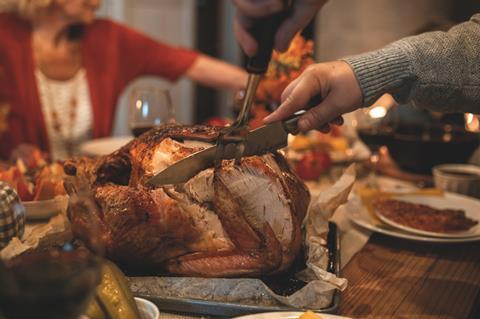
According to Worldpanel, the emphasis on offers and lower pricing means that the cost of Christmas dinner for four is slightly cheaper than last year, at £32.46, with the price of a frozen turkey dropping to £13.52, down by 3.6%. However, despite keeping an eye on budgets, retailers know that consumers also want to indulge during the festive season.
McKevitt continues: “Retailers are savvy to the fact that at Christmas especially – even when times are tough – consumers still find the space in their wallet to spend on small treats.
“In fact, we’ve seen that right through the cost of living crisis as people have found new, more affordable ways to indulge in what we call the ‘pick-me-up pound’. The rise and rise of premium own label lines bears this out with one in every £20 now spent on these treat-type products.”
Supermarket share
Online remains the fastest growing sector, with sales up by 8% in November to hit the second highest ever sales in a month since the pandemic high of February 2021. Ocado reached a new record market share of 2.2%, with sales increasing by 15.8% over the 12 weeks to 30th November.
However, bricks and mortar still dominates the grocery market, and Lidl made the biggest market share gain, with its ninth consecutive month of double-digit growth at 10.2%, winning an additional 0.5 percentage points compared with last year to reach 8.1%. Sales at Sainsbury’s rose by 5.1%, bringing its market share to 16.0%. Tesco grew sales by 4.7%, attracting 321,000 more shoppers over the 12 weeks versus last year, and it now holds 28.3% of the market.
Spending at Aldi increased by 4.1% and its share remains at 10.5%. Waitrose and Iceland both grew ahead of the market at 4.0%, maintaining shares of 4.4% and 2.3%, respectively.
Sales at Asda account for 11.5% of the market and Morrisons holds 8.3%. Co-op’s share stands at 5.3%. Sales of take-home groceries at M&S were 8.9% higher over the 12 weeks compared with the same period in 2024.