

National Farmers’ Union Scotland has released its ‘Year In Review: ShelfWatch 2025-26’ results, finding that 54% of beef on sale in Scottish retailers was Scotch Beef.
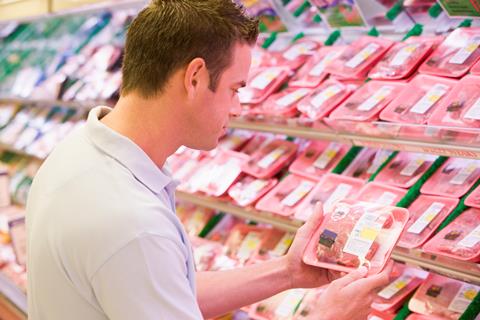
The picture was different across products, with less than 5% of own-label pork being Scottish and imports “dominating” the category. Lamb imports increased sharply, while mixed-origin labelling continued to “cause confusion” for shoppers.
On average, 26% of own-label products on supermarket shelves in Scotland were Scottish, and NFU Scotland found “some disparity” between retailers’ stated commitments to local sourcing and Scottish producers.
Beef prices surged
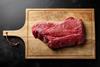
The report noted an “unprecedented surge” in beef prices, and despite tightening supplies driven by “strong” UK demand for cattle, Scotch Beef remained the most likely origin beef on shelves, accounting for 54% of all beef – a 3% increase on the previous year.
Lidl had the largest percentage of Scotch Beef, while Sainsbury’s increased its Irish Beef offering by 6%. At Morrisons, 3% of its steaks were from Australia, and 5% of Asda’s were from Uruguay.
NFU Scotland noted that this was the first time it had recorded imported beef from the southern hemisphere, which it labelled a “concerning precedent”.
British lamb “marginally increases” in Scotland
Compared to last year, NFU Scotland pointed out that there has been a “slight decrease” in both Scotch and imported lamb, with a “marginal increase” in British lamb. Lidl had the highest proportion of Scotch Lamb at 92%, an 8% drop on the year. Aldi showed the most significant improvement, increasing its Scotch Lamb offering by 43%, bringing them in line with M&S, with 81% Scotch.
M&S has joined Co-op in removing imported lamb from its shelves entirely, which it called a “notable change” as imported lamb previously represented 5% of M&S’s range. Asda had the highest proportion of imported lamb at 72%, while Morrisons and Sainsbury’s increased their imports by 13% and 12%, respectively.
Pork labelling a “key concern”
Over the past year, ShelfWatch expanded its pork audit to include cooked ham, broadening the range of pork products that were assessed. It also added a “mixed origin” category to better capture products with unclear labelling, which NFU Scotland said was a “key concern” for consumer transparency.
Scottish pork representation remained largely unchanged since January 2025 (+0.1%), though results varied by product. Sausages saw no imports, with 9% Scottish and 91% UK, while only 3% of bacon was Scottish. Bacon was 61% British, which was up 15% on the year, and 26% was either EU or mixed origin.
Aldi and Lidl were labelled the “main supporters” of Scottish pork, with 41% and 20%, respectively. Tesco offered a small proportion of Scottish ham and bacon (5% and 3% respectively). Co-op, M&S and Sainsbury’s did not import pork products, while Asda imported 49% of its pork products - the highest among the major supermarkets.
Andrew Connon, NFU Scotland president, commented: “We continue to value Aldi’s engagement and commitment to Scottish produce, we hope it sets the standard for others to follow.
“Notably they are steadfast in the support for Scotch Lamb, up 43% versus last year, a category where others have struggled, and continued leadership in Scottish Pork. This demonstrates the real impact when retailers actively support Scottish farmers and crofters. ShelfWatch gives invaluable, data-driven insight into sourcing and labelling practices, helping ensure that local producers, consumers, and the wider Scottish economy all benefit.”